

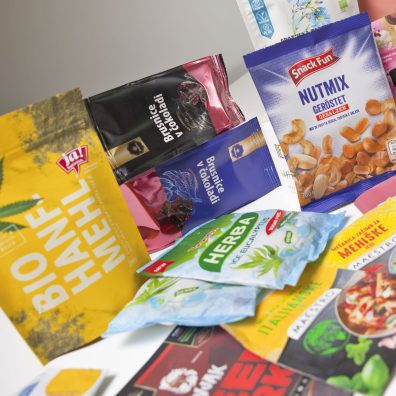
Flexible packaging
Flexible packaging is extremely flexible in format and has no defined shape so it can be easily changed. It is designed to pack anything: solids, liquids, gels, gases, fat or powders. It can be found in many different shapes and forms such as tubes, sachets, pouches, wrappers, bags, twists, etc. The flexible packaging products are usually made of flexible or easy yielding materials. The most frequently used are plastic film, metallic foil, paper or paper-based material, regenerated cellulose film or a combination of these.
Flexible packaging gives packed products the necessary load-bearing capacity and protection, while also providing numerous sales, distribution, sustainable and marketing advantages and opportunities.
Paper materials include:
- non-coated paper (for labels that do not require high print quality),
- coated paper (for quality printed labels),
- heat-sensitive paper (for reprinting variable data, e.g. declarations, weight labels, etc.),
- metallised paper (for a special visual effects or as a substitute for gold-printing),
- black glue paper (to cover incorrect indications on packaging or printed works),
- special paper (with a special structure or colour shade, e.g. for wine labels).
Synthetic materials include:
- polypropylene or BOPP (fairly durable, slightly stretchable),
- metallised BOPP (the same as PP, but useful for special metallic effects, barrier function),
- polyethylene or LDPE (more stretchable material, welding layer in laminated structure),
- polyester or PET (highly durable and persistent material, mostly not suitable for welding).
When choosing the implementation of the label, it is very important to determine the right combination of basic material and adhesive.